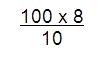
EMT Practice Test

1. Question Content...


Question List

Question1: Company A has made an offer to acquire Company Z.
Both companies are quoted and their current market share prices are:
* Company A - $4
* Company Z - $5
Shareholders in company Z have been given three alternative offers:
* Cash of $5.50 per share
* Share for share exchange on the basis of 3 for 2
* 10.5% long dated bond for every 20 shares
The bond is has a nominal value of $100 and the expected yield on bonds of similar risk is 10%.
You are advising a Company Z shareholder on the three offers.
She requires a 15% premium if she is to accept the offer.
In providing your advice, which of the following statements is correct?

Question2: Company Z has just completed the all-cash acquisition of Company A.
Both companies operate in the advertising industry.
The market considered the acquisition a positive strategic move by Company Z.
Which THREE of the following will the shareholders of Company Z expect the company's directors to prioritise following the acquisition?

Question3: A company has some 7% coupon bonds in issue and wishes to change its interest rate profile.
It has decided to do this by entering into a plain coupon interest rate swap with it's bank.
The bank has quoted a swap rate of: 6.0% - 6.5% fixed against LIBOR.
What will the company's new interest rate profile be?

Question4: A new company was set up two years ago using the personal financial resources of the founders.
These funds were used to acquire suitable premises.
The company has entered into a long-term lease on the premises which are not yet fully fitted out.
The founders are considering requesting loan finance from the company's bank to fund the purchase of custom-made advanced technology equipment.
No other companies are using this type of equipment.
The company expects to continue to be profitable for the forseeable future.
It re-invests some of its surplus cash in on-going essential research and development.
Which THREE of the following features are likely to be considered negatives by the bank when assessing the company's credit-worthiness?

Question5: A company is based in Country Y whose functional currency is Y$. It has an investment in Country Z whose functional currency is Z$.
This year the company expects to generate Z$ 10 million profit after tax.
Tax Regime:
* Corporate income tax rate in country Y is 50%
* Corporate income tax rate in country Z is 20%
* Full double tax relief is available
Assume an exchange rate of Y$ 1 = Z$ 5.
What is the expected profit after tax in Y$ if the Z$ profit is remitted to Country Y?

Question6: A company has announced a rights issue of 1 new share for every 4 existing shares.
Relevant data:
* The current market price per share is $10.00.
* Rights are to be issued at a 20% discount to the current price.
* The rate of return on the new funds raised is expected to be 10%.
* The rate of return on existing funds is 5%.
What is the yield-adjusted theoretical ex-rights price?
Give your answer to two decimal places.
$ ?

Question7: HHH Company has a fixed rate loan at 10.0%, but wishes to swap to variable. It can borrow at the risk-free rate +8%. The bank is currently quoting swap rates of 3.1% (bid) and 3.5% (ask). What net rate will HHH Company pay if it enters into the swap?

Question8: A company's gearing (measured as debt/(debt + equity)) is currently 60% and it is investigating whether an optimal gearing structure exists within the industry.
It has analysed the capital structure of similar companies in the industry and it would appear that there is evidence supporting the traditional theory of capital structure.
Companies with the lowest WACC in the industry have gearing of around 45% to 50%.
Which of the following actions would result in the company achieving a more optimal capital structure?

Question9: The value of a call option will increase because of:
Question10: Company C has received an unwelcome takeover bid from Company P.
Company P is approximately twice the size of Company C based on market capitalisation.
Although the two companies have some common business interests, the main aim of the bid is diversification for Company P.
The offer from Company P is a share exchange of 2 shares in Company P for 3 shares in Company C.
There is a cash alternative of $5.50 for each Company C share.
Company C has substantial cash balances which the directors were planning to use to fund an acquisition.
These plans have not been announced to the market.
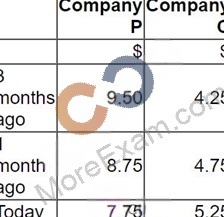
The following share price information is relevant. All prices are in $.

Which of the following would be the most appropriate action by Company C's directors following receipt of this hostile bid?

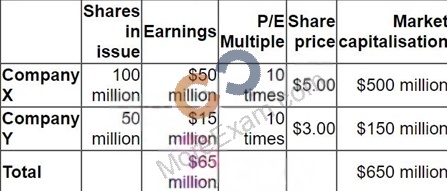
Question11: Company X plans to acquire Company Y.
Pre-acquisition information:

Post-acquisition information:
Total combined earnings are expected to increase by 10%
Total combined P/E multiple will remain at 10 times
Which of the following share-for-share exchanges will result in an increase of 10% in Company X's share price post-acquisition?

Question12: The Board of Directors of a small listed company engaged in exploration are currently considering the future dividend policy of the company. Exploration is considered a high-risk business and consequently the company has a low level of debt finance.
Forecasts indicate a period of profit fluctuation in the next few years as the company is planning to embark on a major capital investment project. Debt finance is unlikely to be available due to the project's high business risk.
Which THREE of the following are practical considerations when determining the company's dividend/retention policy?

Question13: Company BBB has prepared a valuation of a competitor company, Company BBD. Company BBB is intending to acquire a controlling interest in the equity of Company BBD and therefore wants to value only the equity of Company BBD.

The directors of Company BBB have prepared the following valuation of Company BBD:
Value of Equity = 4.63 + 5.14 + 5.56 = S15.33 million
Additional information on Company BBD:

Which THREE of the following are weaknesses of the above valuation?

Question14: A product costs USD10 when purchased in the USA. The same product costs USD12 when it is purchased in the UK and the price in GBP is convened to USD.
Which of the following statement concerning purchasing power parity is correct?

Question15: H Company has a fixed rate load at 10.0%, but wishes to swap to variable. It can borrow at LIBOR 8%.
The bank is currently quoting swap rates of 3.1% (bid) and 3.5% (ask).
What net rate will H Company pay if it enters into the swap?

Question16: A company currently has a 5.25% fixed rate loan but it wishes to change the interest style of the loan to variable by using an interest rate swap directly with the bank.
The bank has quoted the following swap rate:
* 4.50% - 455% in exchange for Libor
Libor is currently 4%.
If the company enters into the swap and Libor remains at 4%. what will the company's interest cost be?

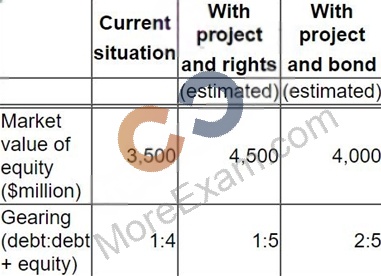
Question17: A listed company plans to raise $350 million to finance a major expansion programme.
The cash flow projections for the programme are subject to considerable variability.
Brief details of the programme have been public knowledge for a few weeks.
The directors are considering two financing options, either a rights issue at a 20% discount to current share price or a long term bond.
The following data is relevant:

The company's share price has fallen by 5% over the past 3 months compared with a fall in the market of 3% over the same period.
The directors favour the bond option.
However, the Chief Accountant has provided arguments for a rights issue.
Which TWO of the following arguments in favour of a right issue are correct?

Question18: NNN is a company financed by both equity and debt. The directors of NNN wish to calculate a valuation of the company's equity and at a recent board meeting discussed various methods of business valuation.
Which THREE of the following are appropriate methods for the directors of NNN to use in this instance?

Question19: A company is planning to issue a 5 year $100 million bond at a fixed rate of 6%.
It is also considering whether or not to enter into a 10 year $100 million swap to receive 5% fixed and pay Libor + 1% once a year.
The company predicts that Libor will be 4% over the life of the 5 years.
What is the impact of the swap on the company's annual interest cost assuming that the Libor prediction is correct?

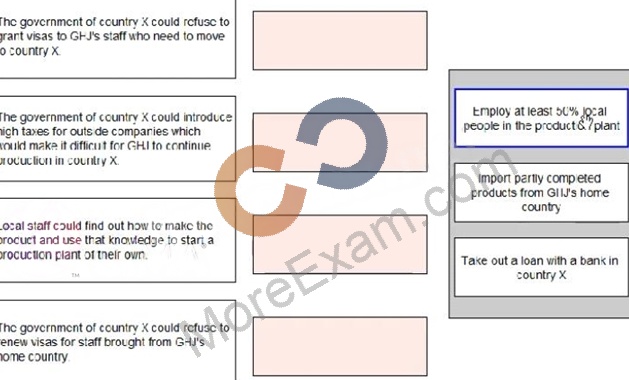
Question20: CI IJ has decided to move its production plant to overseas country X. This would make the product cheaper to produce. The technology used to make the product is very advanced and some of the skilled staff would have to move to country X.
The Production Director has identified that there are some political risks in moving to county X.
For each of the political risks of moving to country X shown below, select the correct method for reducing the risk.

Question21: A company is financed as follows:
* 400 million $1 shares quoted at $3.00 each.
* $800 million 5% bonds quoted at par.
The company plans to raise $200 million long term debt to finance a project with a net present value of $100 million.
The bank that is providing the debt is insisting on a maximum gearing level covenant.
Gearing will be based on market values and calculated as debt/(debt + equity).
What is the lowest figure for the gearing covenant that the bank could impose without the company breaching the agreement?

Question22: A company gas a large cash balance but its directors have been unable to identify any positive NPV projects to invest in. Which THREE of the following are advantages of a share repurchase, compared with a one-off large dividend?

Question23: A listed company is financed by debt and equity.
If it increases the proportion of debt in its capital structure it would be in danger of breaching a debt covenant imposed by one of its lenders.
The following data is relevant:

The company now requires $800 million additional funding for a major expansion programme.
Which of the following is the most appropriate as a source of finance for this expansion programme?

Question24: A company has undertaken a transaction with its shareholders which has had the following impact on its financial statements:
* Retained earnings has decreased
* Share capital has increased
* Earnings per share has decreased
* The book value of equity is unchanged
The company has undertaken a:

Question25: Company AB was established 6 years ago by two individuals who each own 50% of the shares.
Each individual heads a separate division within the company, which now has annual turnover of GBP10 million and employs 40 people.
Some of the employees are very highly paid as they are important contributors to the company's profitability.
The owners of the company wish to realise the full value of their investment within the next 12 months.
Which TWO of the following options are most likely to be acceptable exit strategies to the two owners of the company?

Question26: An unlisted company:
* Is owned by the original founder and member of their families.
* Is growing more rapidly than other companies in the same industry.
* Pays a fixed annual divided
Which of the following methods would be the most appropriate to value this company's equity?

Question27: Country X's short-term interest rates are slightly higher than its long-term rates. Which THREE of the following statements are correct?

Question28: A company has just received a hostile bid. Which of the following response strategies could be considered?

Question29: Providers of debt finance often insist on covenants being entered into when providing debt finance for companies.
Agreement and adherence to the specific covenants is often a condition of the loan provided by the lender.
Which THREE of the following statements are true in respect of covenants?

Question30: On 31 October 20X3:
* A company expected to agree a foreign currency transaction in January 20X4 for settlement on 31 March 20X4.
* The company hedged the currency risk using a forward contract at nil cost for settlement on 31 March 20X4.
* The transaction was correctly treated as a cash flow hedge in accordance with IAS 39 Financial Instruments: Recognition and Measurement.
On 31 December 20X3, the financial year end, the fair value of the forward contract was $10,000 (asset).
How should the increase in the fair value of the forward contract be treated within the financial statements for the year ended 31 December 20X3?

Question31: A company is valuing its equity prior to an initial public offering (IPO).
Relevant data:
* Earnings per share $1.00
* WACC is 8% and the cost of equity is 12%
* Dividend payout ratio 40%
* Dividend growth rate 2% in perpetuity
The current share price using the Dividend Valuation Model is closest to:

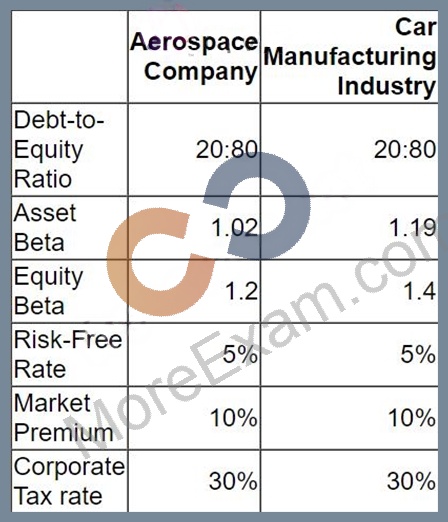
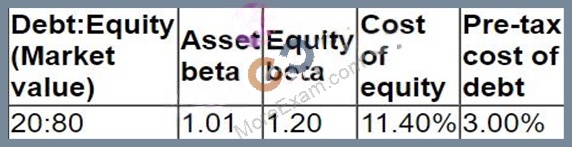
Question32: An aerospace company is planning to diversify into car manufacturing.
Relevant data:

What is the the cost of equity to be used in the WACC for the project appraisal?
Give your answer in percentage, as a whole number.

Question33: A company's current earnings before interest and taxation are $5 million.
These are expected to remain constant for the forseeable future.
The company has 10 million shares in issue which currently trade at $3.60.
It also has a $10 million long term floating rate loan.
The current interest rate on this loan is 5%.
The company pays tax at 20%.
The company expects interest rates to increase next year to 6% and it's Price/Earnings (P/E) ratio to move to 9.5 times by the end of next year.
What percentage reduction in the share price will occur by the end of next year if the interest rate increase and the P/E movement both occur?

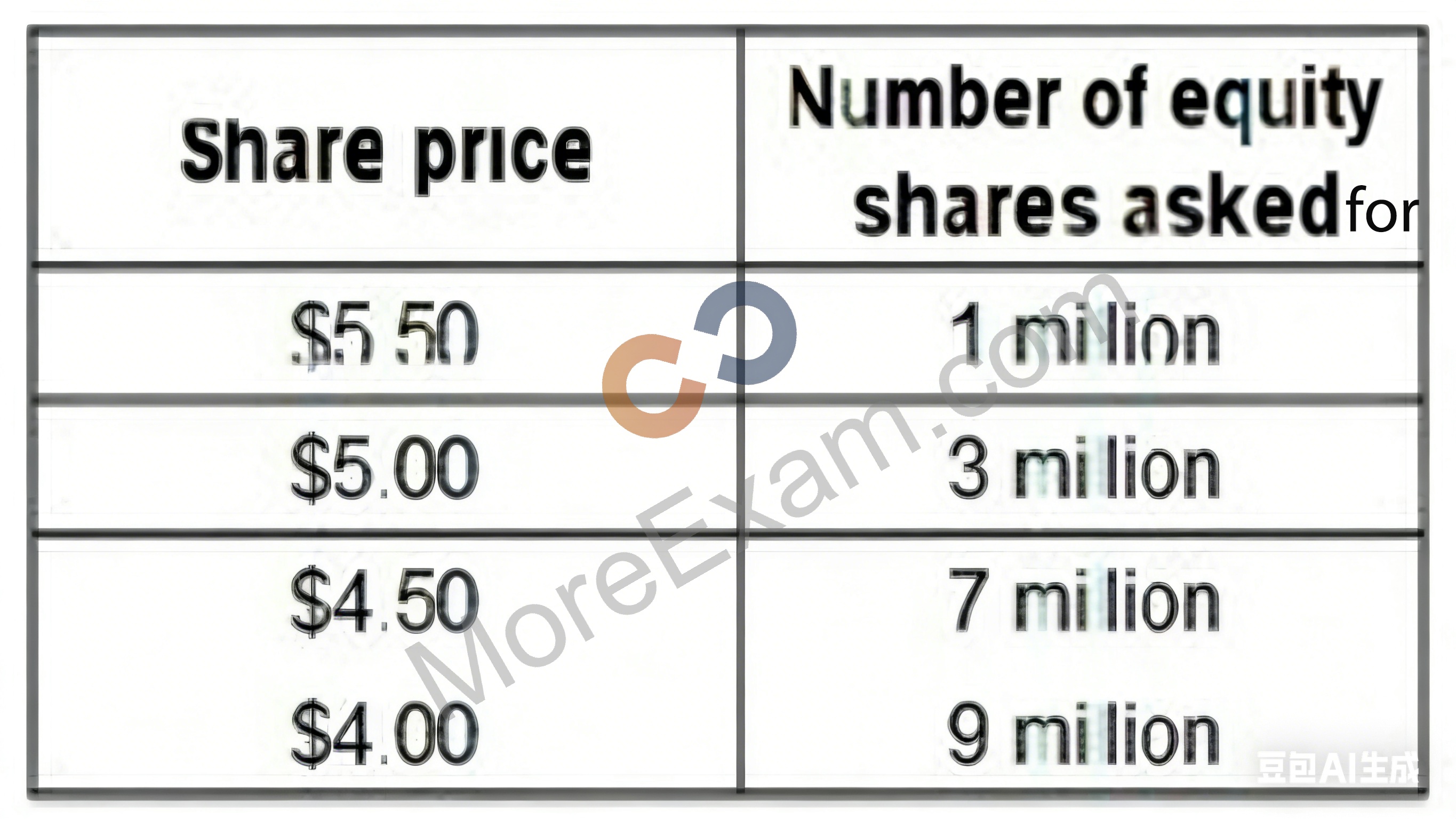
Question34: RST wishes to raise at least $40 million of new equity by issuing up to 10 million new equity shares at a minimum price of $3.00 under an offer for sale by tender. It receives the following tender offers:

What is the maximum amount that RST can raise by this share issue?
(Give your answer to the nearest $ million).

Question35: A company has 8% convertible bonds in issue. The bonds are convertible in 3 years time at a ratio of 20 ordinary shares per $100 nominal value bond.
Each share:
* has a current market value of $5.60
* is expected to grow at 5% each year
What is the expected conversion value of each $100 nominal value bond in 3 years' time?

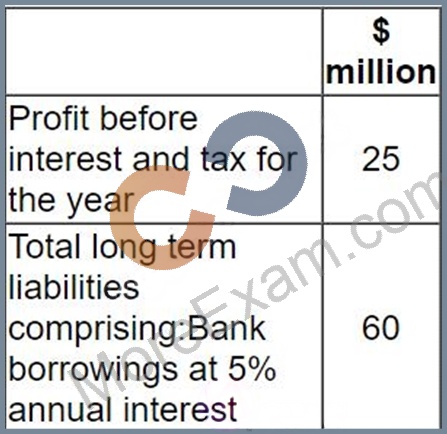
Question36: At the last financial year end, 31 December 20X1, a company reported:

The corporate income tax rate is 30% and the bank borrowings are subject to an interest cover covenant of 4 times.
The results are presently comfortably within the interest cover covenant as they show interest cover of 8.3 times. The company plans to invest in a new product line which is not expected to affect profit in the first year but will require additional borrowings of $20 million at an annual interest rate of 10%.
What is the likely impact on the existing interest cover covenant?

Question37: A company has a cash surplus which it wishes to distribute to shareholders by a share repurchase rather than paying a special dividend.
Which THREE of the following statements are correct?

Question38: A national rail operating company has made an offer to acquire a smaller competitor.
Which of the following pieces of information would be of most concern to the competition authorities?

Question39: Which THREE of the following statements are true of a money market hedge?

Question40: Company A has agreed to buy all the share capital of Company B.
The Board of Directors of Company A believes that the post-acquisition value of the expanded business can be computed using the "boot-strapping" concept.
Which of the following most accurately describes "boot-strapping" in this context?

Question41: A profitable company wishes to dispose of a loss-making division that generated negative free cashflow in the last financial year.
The division requires significant new investment to return it to profitability.
Which of the following valuation approaches is likely to be the most useful to the company when negotiating the sales price?

Question42: Company Y plans to diversify into an activity where Company X has an equity beta of 1.6, a debt beta of zero and gearing of 50% (debt/debt plus equity).
The risk-free rate of return is 5% and the market portfolio is expected to return 10%.
The rate of corporate income tax is 30%.
What would be the risk-adjusted cost of equity if Company Y has 60% equity and 40% debt?

Question43: A UK company enters into a 5 year borrowing with bank P at a floating rate of GBP Libor plus 3%
It simultaneously enters into an interest rate swap with bank Q at 4.5% fixed against GBP Libor plus 1.5%
What is the hedged borrowing rate, taking the borrowing and swap into account?
Give your answer to 1 decimal place.

Question44: M is an accountant who wishes to take out a forward rate agreement as a hedging instrument but the company treasurer has advised that a short-term interest rate future would be a better option.
Which of the following is true of a short-term interest rate future?

Question45: A company's Board of Directors is considering raising a long-term bank loan incorporating a number of covenants.
The Board members are unsure what loan covenants involve.
Which THREE of the following statements regarding loan covenants are true?

Question46: A company is concerned about the interest rate that it will be required to pay on a planned bond issue.
It is considering issuing bonds with warrants attached.
Advise the directors which of the following statements about warrants is NOT correct?

Question47: Company A plans to acquire a minority stake in Company B.
The last available share price for Company B was $0.60.
Relevant data about Company B is as follows:
* A dividend per share of $0.08 has just been paid
* Dividend growth is expected to be 2%
* Earnings growth is expected to be 4%
* The cost of equity is 15%
* The weighted average cost of capital is 13%
Using the dividend growth model, what would be the expected change in share price?

Question48: A listed company follows a policy of paying a constant dividend. The following information is available:
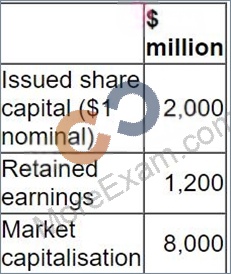
* Issued share capital (nominal value $0.50) $60 million
* Current market capitalisation $480 million
The shareholders are requesting an increased dividend this year as earnings have been growing. However, the directors wish to retain as much cash as possible to fund new investments. They therefore plan to announce a 1-for-10 scrip dividend to replace the usual cash dividend.
Assuming no other influence on share price, what is the expected share price following the scrip dividend?
Give your answer to 2 decimal places.
$ ?

Question49: A company is planning a share repurchase programme with the following details:
* Repurchased shares will be immediately cancelled.
* The shares will be purchased at a premium to the market share price.
The current market share price is greater than the nominal value of the shares.
Which of the following statements about the impact of the share repurchase programme on the company's financial statements is correct?

Question50: Which THREE of the following statements are correct in respect of the issuance of debt securities.

Question51: Which of the following statements best describes a residual dividend policy?
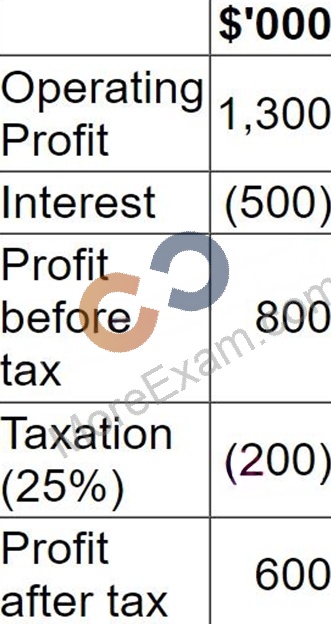
Question52: A company is concerned that a high proportion of its debt portfolio consists of variable rate finance with an interest rate of LIBOR ' 1 .0%.
It is considering using an interest rate swap to reduce interest rate risk out is concerned about additional finance cost this might create.
A bank has quoted swap rates of 3% 3.5% against LIBOR.
Is an interest rate swap likely to be beneficial to the company at current LIBOR rates?

Question53: A company has identified potential profitable investments that would require a total of S50 million capital expenditure over the next two years The following information is relevant.
* The company has 100 million shares in issue and has a market capitalisation of S500 million
* It has a target debt to equity ratio of 40% based on market values This ratio is currently 30%
* Earnings for the current year are expected to be S1 00 million
* Its last dividend payment was $1 per share One of the company's objectives is to increase dividends by at least 10% each year
* The company has no cash reserves
Which of the following is the most suitable method of financing to meet the company's requirements?

Question54: ZZZ is a listed company based in Brinland. a European country. It is the largest owner and operator of residential care homes for elderly people in Brinland
Most of the residential care homes in Brinland are run by small private operators, and the standards of cafe are extremely variable However. 22Z has developed a good reputation because its client service is considered to be extremely good even though its prices are higher than those of most of its competitors.
ZZZ has expanded rapidly in the last few years, partly by acquisition and partly by organic growth consequently, the company's share price now stands at a record high, and the dividend declared at the end of the most recent accounting period was 10% higher than the previous year's dividend.
The Brinland government has recently set up a regulatory body to monitor the residential care homes industry. The regulatory body is considering introducing a variety of regulations to improve the customer experience in the industry. Following a period of consultation and investigation, the regulatory body is expected to announce a range of new regulations in the near future.
The directors of ZZZ are concerned that the new regulations may adversely affect their company
Which THREE of the following new regulations are likely to have the greatest negative impact on ZZTs performance?

Question55: Which THREE of the following remain unchanged over the life of a 10 year fixed rate bond?

Question56: Using the CAPM, the expected return for a company is 10%. The market return is 7% and the risk free rate is 1%.
What does the beta factor used in this calculation indicate about the risk of the company?

Question57: A company has:
* $7 million market value of equity
* $5 million market value of debt
* WACC of 9.375%
* Corporate income tax rate of 15%
According to Modigliani and Miller's theory of capital structure with tax, what is the ungeared cost of equity?

Question58: Company X is an established, unquoted company which provides IT advisory services.
The company's results and cashflows are growing steadily and it has few direct competitors due to the very specialised nature of it's business. Dividends are predictable and paid annually.
Company P is looking to buy 30% of company X's equity shares.
Which TWO of the following methods are likely to be considered most suitable valuation methods for valuing company P's investment in Company X?

Question59: Which three of the following are most likely be primary objectives for a newly established, unincorporated entity in the service sector?

Question60: A company has forecast the following results for the next financial year:
The following is also relevant:
* Profit after tax for the year can be assumed to be equivalent to free cash flow for the year.
* Debt finance comprises a $10 million floating rate loan which currently carries an interest rate of 5%.
* $400,000 investment in non-current assets is required to achieve required growth, all of which is to financed from next year's free cash flow.
* The company plans to pay a dividend of $150,000 next year, financed from next year's free cash flow.
The company is concerned that interest rates could rise next year to 6% which could then affect their investment plans.

If interest rates were to rise to 6% and the company wishes to maintain its dividend amount, the planned investment expenditure will decrease by:

Question61: A company needs to raise $20 million to finance a project.
It has decided on a rights issue at a discount of 20% to its current market share price.
There are currently 20 million shares in issue with a nominal value of $1 and a market price of $5 per share.
Calculate the terms of the rights issue.

Question62: An unlisted company wishes to obtain an estimated value for its shares in anticipation of a private sale of a large parcel of shares.
Relevant data for the unlisted company:
* It has a residual dividend policy.
* It has earnings that are highly sensitive to underlying economic conditions.
* It is a small business in a large industry where there are listed companies but there are none with a similar capital structure.
The company intends to base valuations on the cost of equity of a proxy company after adjusting for any differences in capital structure where appropriate.
Which of the following methods is likely to give the most accurate equity value for this unlisted company?

Question63: The following information relates to Company A's current capital structure:

Company A is considering a change in the capital structure that will increase gearing to 30:70 (Debt:Equity).
The risk -free rate is 3% and the return on the market portfolio is expected to be 10%.
The rate of corporate tax is 25%
Using the Capital Asset Pricing Model, calculate the cost of equity resulting from the proposed change to the capital structure.

Question64: Company Z has identified four potential acquisition targets: companies A, B, C and D.
Company Z has a current equity market value of $590 million.
The price it would have to pay for the equity of each company is as follows:

Only one of the target companies can be acquired and the consideration will be paid in cash.
The following estimations of the new combined value of Company Z have been prepared for each acquisition before deduction of the cash consideration:

Ignoring any premium paid on acquisition, which acquisition should the directors pursue?

Question65: Company T is a listed company in the retail sector.
Its current profit before interest and taxation is $5 million.
This level of profit is forecast to be maintainable in future.
Company T has a 10% corporate bond in issue with a nominal value of $10 million.
This currently trades at 90% of its nominal value.
Corporate tax is paid at 20%.
The following information is available:

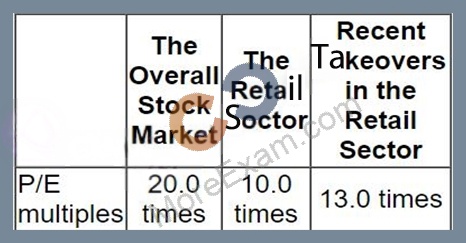
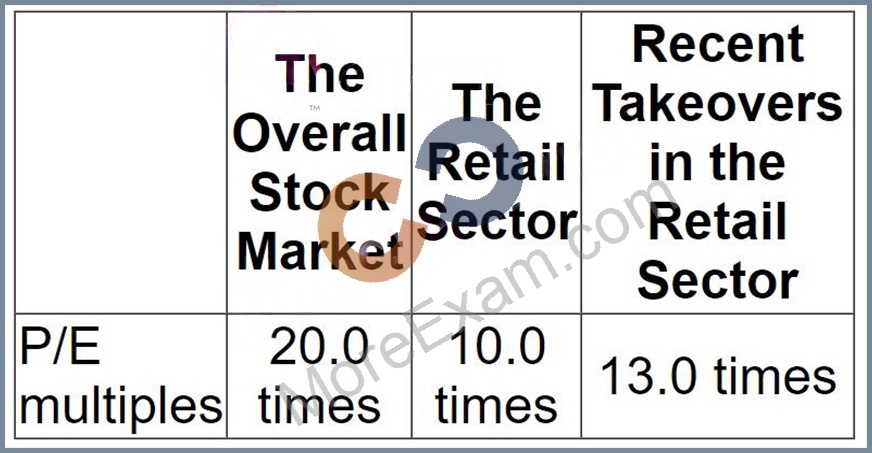
Which of the following is a reasonable expectation of the equity value in the event of an attempted takeover?

Question66: Which of the following best explains why the interest rate parity model is highly effective in practice?

Question67: A company's directors plan to increase gearing to come in line with the industry average of 40%. They need to know what the effect will be on the company's WACC.
According to traditional theory of gearing the WACC is most likely to:

Question68: A wholly equity financed company has the following objectives:
1. Increase in profit before interest and tax by at least 10% per year.
2. Maintain a dividend payout ratio of 40% of earnings per year.
Relevant data:
* There are 2 million shares in issue.
* Profit before interest and tax in the last financial year was $5 million.
* The corporate income tax rate is 30%.
At the beginning of the current financial year, the company raised long term debt of $2 million at 10% interest each year.
Calculate the dividend per share that will be announced this year assuming the company achieves its objective of increasing profit before interest and tax by 10%.

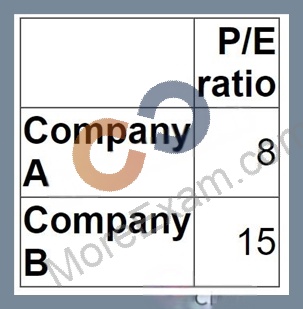
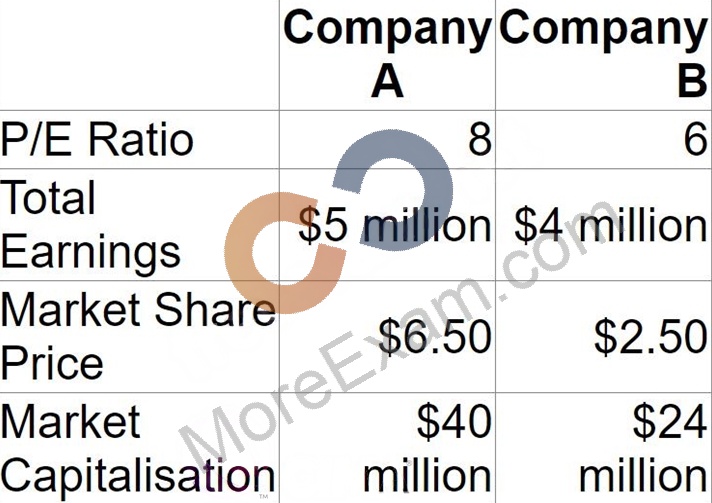
Question69: Two companies that operate in the same industry have different Price/Earnings (P/E) ratios as follows:

Which of the following is the most likely of the different P/E ratios?

Question70: A large, quoted company that is all-equity financed is planning to acquire a smaller unquoted company that is also all-equity financed.
The acquiring company's directors are using the dividend valuation model to value the target company before making an offer.
Relevant data for the target company:
* Dividends paid in the last financial year $2 million
* Book value of net assets $15 million
* Shares in issue 1 million
The acquiring company's cost of capital is 10%.
Its directors believe they can improve the target company's performance in the long term.
They estimate there will be no growth in the first year of the acquisition but from year 2 onwards there will be a 4% growth each year in perpetuity.
What is the maximum price the acquiring company should offer for each of the shares in the target company?

Question71: A company is currently all-equity financed with a cost of equity of 9%.
It plans to raise debt with a pre-tax cost of 3% in order to buy back equity shares.
After the buy-back, the debt-to-equity ratio at market values will be 1 to 2.
The corporate income tax rate is 25%.
Which of the following represents the company's cost of equity after the buy-back according to Modigliani and Miller's Theory of Capital Structure with taxes?

Question72: Company M's current profit before interest and taxation is $5.0 million.
It has a long-term 10% corporate bond in issue with a nominal value of $10 million.
The rate of corporate tax is 25%.
It plans to continue to pay out 50% of its earnings in dividends and earnings are expected to grow by 3% each year in perpetuity.
Its cost of equity is 10%.
Using the dividend growth model, advise the Board of Directors of Company M which of the following provide a reasonable valuation of Company M's equity?

Question73: A company is planning to repurchase some of its shares. Relevant details are as follows:
* 100 million shares in issue
* Current share price $5
* 5 million shares to be repurchased
* 10% repurchase premium
* Repurchased shares to be cancelled
What would you expect the share price after the repurchase to be?
Give your answer to two decimal places.
$ ?

Question74: A company with a market capitalisation of S50million is considering raising $1 million debt to fund a new 10-year capital investment protect
The value of this issue is considered to be small in comparison to the company's market capitalisation
The company is considering whether to raise the debt finance by either a "bond private placing' or a 'public bond issue.
Which THREE of the following statements are correct?

Question75: A company needs to raise $20 million to finance a project.
It has decided on a rights issue at a discount of 20% to its current market share price.
There are currently 20 million shares in issue with a nominal value of $1 and a market price of $5 per share.

Calculate the terms of the rights issue.

Question76: An unlisted company is attempting to value its equity using the dividend valuation model.
Relevant information is as follows:
* A dividend of $500,000 has just been paid.
* Dividend growth of 8% is expected for the foreseeable future.
* Earnings growth of 6% is expected for the foreseeable future.
* The cost of equity of a proxy listed company is 15%.
* The risk premium required due to the company being unlisted is 3%.
The calculation that has been performed is as follows:
Equity value = $540,000 / (0.18 - 0.08) = $5,400,000
What is the fault with the calculation that has been performed?

Question77: An all equity financed company plans an issue of new ordinary shares to the general public to raise finance for a new project
The following data applies:
* 10 million ordinary shares are currently in issue with a market value of S3 each share
* The new project will cost S2.88 million and is expected to give a positive NPV of S1 million
* The issue will be priced at a AaA discount to the current share price.
What gam or loss per share will accrue to the existing shareholders?

Question78: WX, an advertising agency, has just completed the all-cash acquisition of a competitor, YZ. This was seen by the market as a positive strategic move byWX.
Which THREE of the following will WX's shareholders expect the company's directors to prioritise following the acquisition?

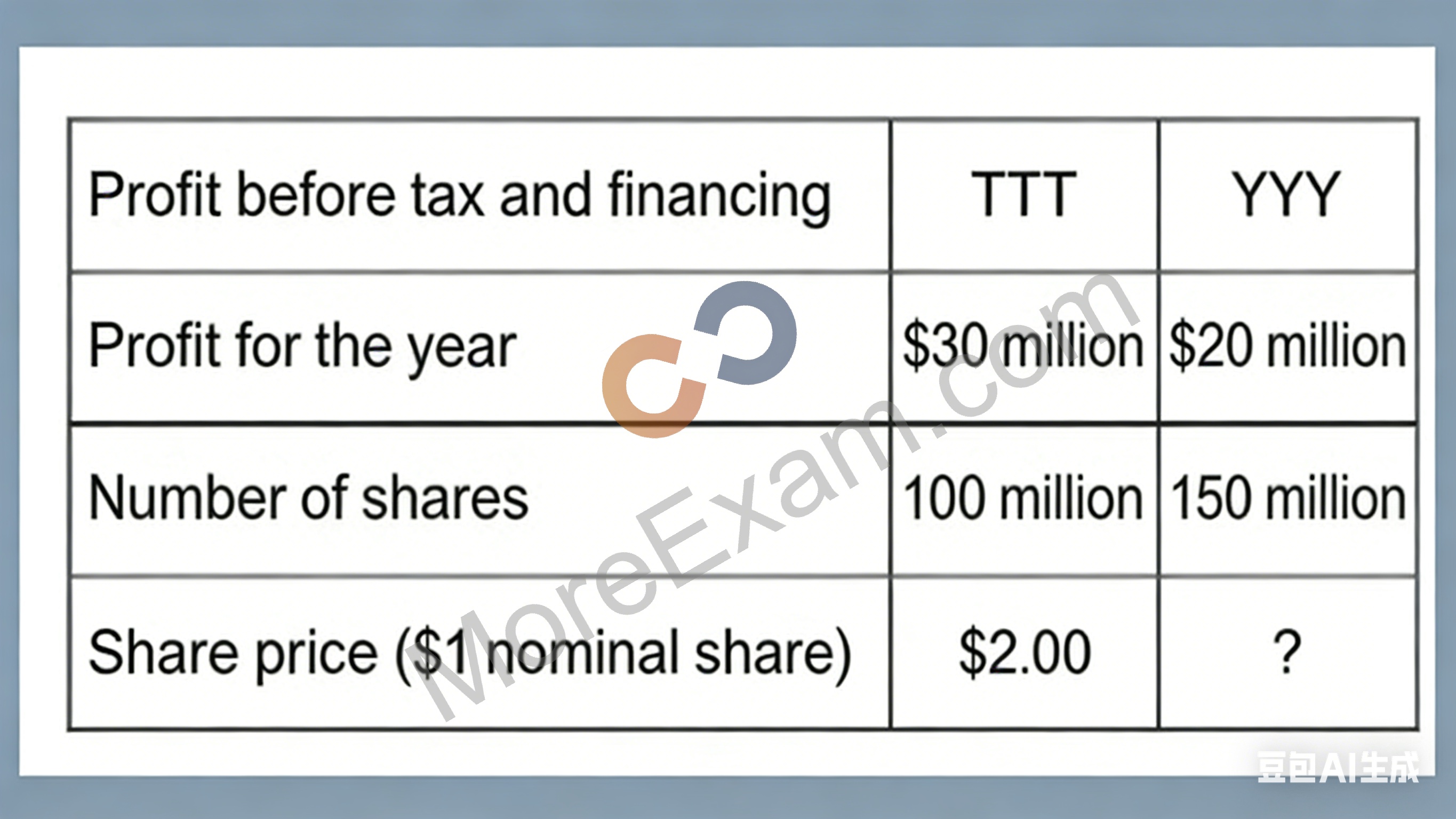
Question79: Two unlisted companies TTT and YYY are being valued. The companies have similar capital structures and risk profiles and operate in the same industry sector It is easier to value TTT than to value YYY because there have recently been several well-publicised private sales of TTT shares.
Relevant company data:

What is the best estimate of YYY's share price?

Question80: Company B is an all equity financed company with a cost of equity of 10%.
It is considering issuing bonds in order to achieve a gearing level of 20% debt and 80% equity.
These bonds will pay a coupon rate of 5% and have an interest yield of 6%.
Company B pays corporate tax at the rate of 25%.
According to Modigliani and Miller's theory of capital structure with tax, what will be Company B's new cost of equity?
A)

B)

C)

D)

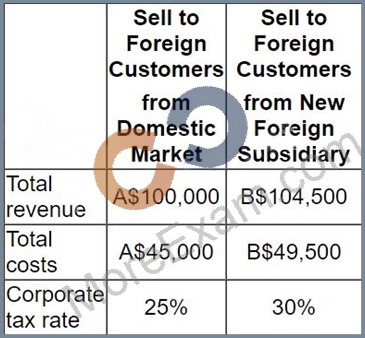
Question81: A company is considering either directly exporting its product to customers in a foreign country or setting up a subsidiary in the foreign country to manufacture and supply customers in that country.
Details of each alternative method of supplying the foreign market are as follows:

There is an import tax on product entering the foreign country of 10% of sales value.
This import duty is a tax-allowable deduction in the company's domestic country.
The exchange rate is A$1.00 = B$1.10
Which alternative yields the highest total profit after taxation?

Question82: A venture capitalist invests in a company by means of buying:
* 9 million shares for $2 a share and
* 8% bonds with a nominal value of $2 million, repayable at par in 3 years' time.
The venture capitalist expects a return on the equity portion of the investment of at least 20% a year on a compound basis over the first 3 years of the investment.
The company has 10 million shares in issue.
What is the minimum total equity value for the company in 3 years' time required to satisify the venture capitalist's expected return?
Give your answer to the nearest $ million.
$ million.

Question83: A manufacturing company is based in Country L whose currency is the L$.
One of the company's products is exported to Country M, a rapidly growing economy, whose currency is the M$.
In the most recent financial year:
* 100,000 units of the product were sold to customers in country M
* The unit selling price was M$12
The spot rate today is L$1 = M$5
The company has an objective of growth in total sales value in L$ of 10% a year.
If the L$ strengthens by 5% next year against the M$, what volume of sales of this product is needed next year to achieve the objective?

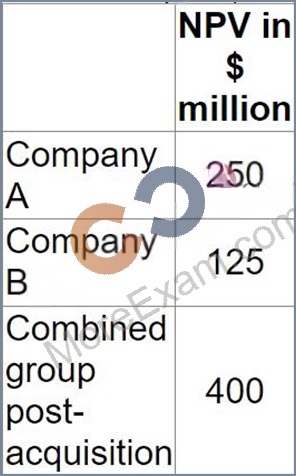
Question84: Company A is planning to acquire Company B by means of a cash offer. The directors of Company B are prepared to recommend acceptance if a bid price can be agreed. Estimates of the net present value (NPV) of future cash flows for the two companies and the combined group post acquisition have been prepared by Company A's accountant. There are as follows:

What is the maximum price that Company A should offer for the shares in Company B?
Give your answer to the nearest $ million

Question85: Company T has 1,000 million shares in issue with a current share price of $10 each.
Company V has 300 million shares in issue with a current share price of $5 each.
Company T is considering acquiring Company V.
Total synergy gains of $100 million have been estimated.
The purchase of Company V's shares would be by cash at a 10% premium above the current share price.
In seeking approval for the acquisition, the likely reaction from T's shareholders will be:

Question86: A company has in a 5% corporate bond in issue on which there are two loan covenants.
* Interest cover must not fall below 3 times
* Retained earnings for the year must not fall below $3.5 million
The Company has 200 million shares in issue.
The most recent dividend per share was $0.04.
The Company intends increasing dividends by 10% next year.
Financial projections for next year are as follows:

Advise the Board of Directors which of the following will be the status of compliance with the loan covenants next year?

Question87: A company is considering whether to lease or buy an asset.
The following data applies:
* The bank will charge interest at 7.14% per annum
* The asset will cost $1 million
* Tax-allowable depreciation is available on a straight line basis over 5 years
* There is no residual value
* Corporate tax is paid at 30% in the year when the profit is earned
What is the NPV of the buy option?
Give your answer to the nearest $000.
$ ?

Question88: MAN is a manufacturing company that is based in country M and sells almost exclusively to customers in country M, priced in the local currency, M$.
MAN wishes to expand the business by acquiring a company that manufactures similar products but has a more global customer base. It is particularly interested in selling to customers in country P, which uses currency P$ but recognises that the P$ is generally quite volatile against the M$.
Country P uses the same language as country M, has free entry of labour from country M, no exchange controls or withholding tax and a favourable double tax treaty.
Which of the following companies would be most suitable takeover candidates for MAN to investigate further?

Question89: Z wishes to borrow at a floating rate and has been told that it can use swaps to reduce the effective interest rate it pays. Z can borrow floating at Libor ' 1, and fixed at 10%.
Which of the following companies would be the most appropriate for Z to enter into a swap with?

Question90: A company is considering a divestment via either a management buyout (MBO) or sale to a private equity purchaser. Which of the following is an argument in favour of the MBO from the viewpoint of the original company?

Question91: Company A, a listed company, plans to acquire Company T, which is also listed.
Additional information is:
* Company A has 100 million shares in issue, with market price currently at $8.00 per share.
* Company T has 90 million shares in issue,. with market price currently at $5.00 each share.
* Synergies valued at $60 million are expected to arise from the acquisition.
* The terms of the offer will be 2 shares in A for 3 shares in B.
Assuming the offer is accepted and the synergies are realised, what should the post-acquisition price of each of Company A's shares be?
Give your answer to two decimal places.
$ ? .

Question92: A company is planning a new share issue.
The funds raised will be used to repay debt on which it is currently paying a high interest rate.
Operating profit and dividends are expected to remain unchanged in the near future.
If the share issue is implemented, which THREE of the following are most likely to increase?

Question93: Company R is a well-established, unlisted, road freight company.
In recent years R has come under pressure to improve its customer service and has had some cusses in doing this However, the cost of improved service levels has resulted In it marketing small losses in its latest financial year. This is the forest time R has not been profitable.
R uses a' residual divided policy ad has paid dividends twice in the last 10 years.
Which of the following methods would be most appropriate for valuating R?

Question94: Which of the following statements is true of a spin-off (or demerger)?

Question95: Which THREE of the following would be most important if a hospital wishes to review the effectiveness of its services?

Question96: A company is wholly equity funded. It has the following relevant data:
* Dividend just paid $4 million
* Dividend growth rate is constant at 5%
* The risk free rate is 4%
* The market premium is 7%
* The company's equity beta factor is 1.2
Calculate the value of the company using the Dividend Growth Model.
Give your answer in $ million to 2 decimal places.
$ ? million

Question97: Company A, a listed company, plans to acquire Company T, which is also listed.
Additional information is:
* Company A has 150 million shares in issue, with market price currently at $7.00 per share.
* Company T has 120 million shares in issue,. with market price currently at $6.00 each share.
* Synergies valued at $50 million are expected to arise from the acquisition.
* The terms of the offer will be 2 shares in A for 3 shares in T.
Assuming the offer is accepted and the synergies are realised, what should the post-acquisition price of each of Company A's shares be?
Give your answer to two decimal places.

Question98: Company M is a listed company in a highly technical service industry.
The directors are considering making a cash offer for the shares in Company Q, an unquoted company in the same industry.
Relevant data about Company Q:
* The company has seen consistent growth in earnings each year since it was founded 10 years ago.
* It has relatively few non-current assets.
* Many of the employees are leading experts in their field. A recent exercise suggested that the value of the company's human capital exceeded the value of its tangible assets.
The directors and major shareholders of Company Q have indicated willingness to sell the company.
Before negotiations become too advanced, the directors of Company M are considering the benefits to their company that would follow the acquisition.
Which THREE of the following are the most likely benefits of the acquisition to Company M's shareholders?

Question99: A company intends to sell one of its business units, Company R by a management buyout (MBO).
A selling price of $100 million has been agreed.
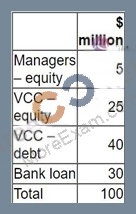
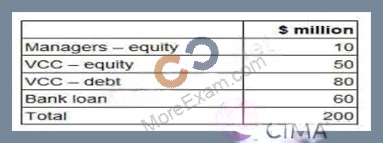
The managers are discussing with a bank and a venture capital company (VCC) the following financing proposal:

The VCC requires a minimum return on its equity investment in the MBO of 30% a year on a compound basis over 5 years.
What is the minimum TOTAL equity value of Company R in 5 years time in order to meet the VCC's required return?
Give your answer to one decimal place.
$ ? million

Question100: A consultancy company is dependent for profits and growth on the high value individuals it employs.
The company has relatively few tangible assets.
Select the most appropriate reason for the net asset valuation method being considered unsuitable for such a company.

Question101: Company ABC's management has noticed that Company BCD has quickly built up a 20% stake by buying shares in Company ABC and are concerned that this is the start of a hostile bid.
This build-up of shares triggers the poison pill provision which automatically converts the rights to buy future preference shares previously issued to existing shareholders in Company ABC to full ordinary shares
What is the most likely impact of the triggering of a poison pill strategy at this stage in the bidding process?

Question102: A listed company is considering either a one-off special divided or a share repurchase scheme to reduce its surplus cash level.
Identify TWO advantages that a one-off special payment has over a share repurchase scheme.

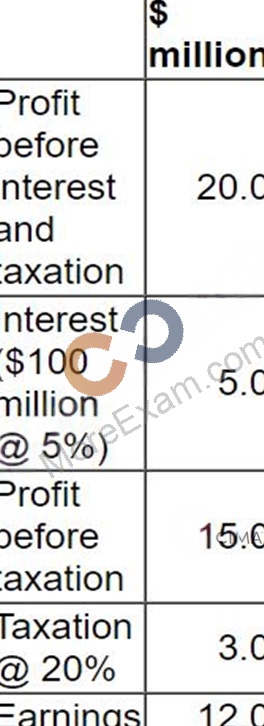
Question103: A company generates operating profit of $17.2 million, and incurs finance costs of $5.7 million.
It plans to increase interest cover to a multiple of 5-to-1 by raising funds from shareholders to repay some existing debt. The pre-tax cost of debt is fixed at 5%, and the refinancing will not affect this.
Assuming no change in operating profit, what amount must be raised from shareholders?
Give your answer in $ millions to the nearest one decimal place.
$ ?

Question104: A listed company is planning a share repurchase.
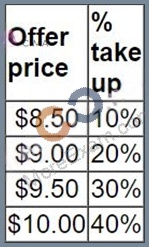
Research into different offer prices has given the following data with regards acceptance by the shareholders at different prices:

What price should be offered to shareholders if the retained earnings of the company are to remain unchanged?

Question105: The Treasurer of Z intends to use interest rate options to set an interest rate cap on Z's borrowings.
Which of the following statement is correct?

Question106: The directors of a unlisted manufacturing company have prepared a valuation of their company using the price-earning method.
Their calculation is:
Value if the company's equity = $6 million x 10 =$60 million where.
* $6 million is the company's reported profit before interested and tax in the most recent accounting period and
* 10 is the average price-earnings ratio for all listed companies
Which THREE of the following are weakness of this valuation?

Question107: A company generates and distributes electricity and gas to households and businesses.
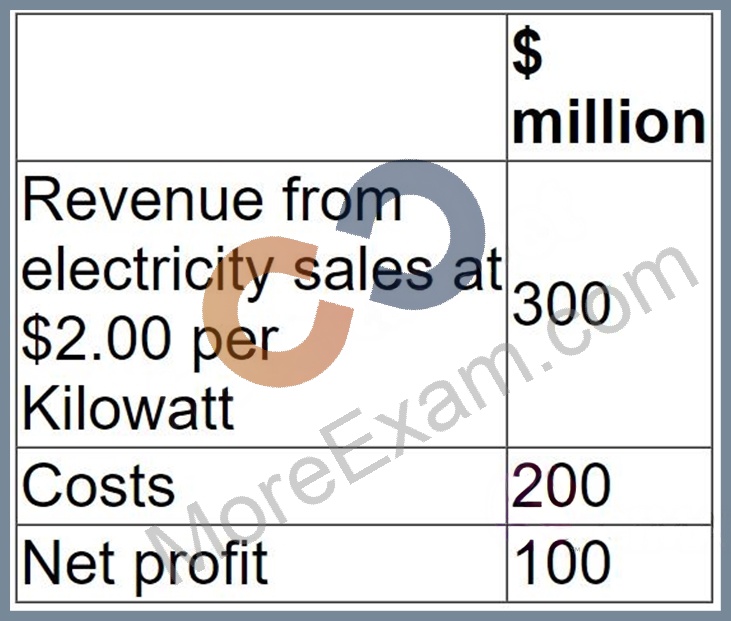
Forecast results for the next financial year are as follows:

The Industry Regulator has announced a new price cap of $1.50 per Kilowatt.
The company expects this to cause consumption to rise by 10% but costs would remained unaltered.
The price cap is expected to cause the company's net profit to fall to:

Question108: Holding cash in excess of business requirements rather than returning the cash to shareholders is most likely to result in lower:

Question109: A listed company has suffered a period of falling revenues and profit margins. It has been obliged to issue a profit warning to the market and its share price has fallen sharply. The company relies heavily on debt finance and is discussing with its banks possible refinancing options to assist with a restructuring programme.
Which THREE of the following are likely to be of MOST interest to the company's banks when they review the refinancing requests?

Question110: Company A is planning to acquire Company B.
Company A's managers think they can improve the performance of Company B to the extent that its own P/E ratio should be applied to Company B's earnings.
Relevant Data:

What is the expected synergy if the acquisition goes ahead?
Give your answer to the nearest $ million.
$ ? million

Question111: A company with 4 million shares in issue wishes to raise $4 million by means of a rights issue
The share price prior to the rights issue is $5.00.
Under the rights issue, 1 million new shares will be issued at $4.00.
When the rights issue is announced it is expected that the Theoretical Ex-rights Price (TERP) will be $4.80
The directors of the company are considering offering any shareholder who does not wish to take up the rights the opportunity to sell the rights back to the company for $1.00.
Which of the following is the most likely consequence of the directors offer?

Question112: Which of the following would be a reason for a company to adopt a low dividend pay-out policy?

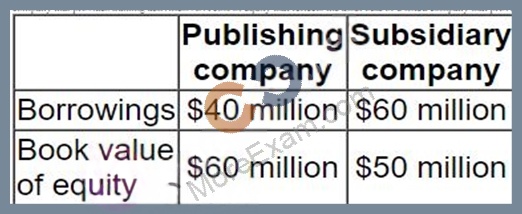
Question113: A listed publishing company owns a subsidiary company whose business activity is training.
It wishes to dispose of the subsidiary company.
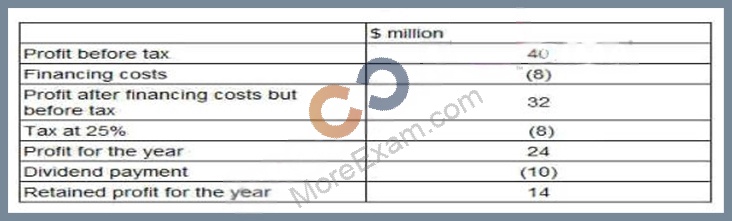
The following information is available:

The board of the publishing company believe that the value of the subsidiary company, and hence the value of the equity invested in it, can be determined by calculating the present value of the subsidiary's free cashflows.
Which of the following is the most appropriate discount rate to use when determining the enterprise value of the company?

Question114: Company HJK is planning to bid for listed company BNM
Financial data for BNM for the financial year ended 31 December 20X1:

HJK is not forecasting any growth in these figures for the foreseeable future
Profit and cost data above should be assumed to be equivalent to cash flow data when answenng this question
Which THREE of the following approaches would be most appropriate for HJK to use to value the equity of BNM?

Question115: A government is currently considering the privatisation of the national airline. The shares are to be offered to the public via a fixed price Initial Public Offering (IPO).
Which THREE of the following statements are correct?

Question116: An all equity financed company reported earnings for the year ending 31 December 20X1 of $5 million.
One of its financial objectives is to increase earnings by 5% each year.
In the year ending 31 December 20X2 it financed a project by issuing a bond with a $1 million nominal value and a coupon rate of 7%.
The company pays corporate income tax at 30%.
If the company is to achieve its earnings target for the year ending 31 December 20X2, what is the minimum operating profit (profit before interest and tax) that it must achieve?

Question117: Which THREE of the following are benefits of integrated reporting?

Question118: A listed entertainment and media company produces and distributes films globally. The company invests heavily in intellectual property in order to create the scope for future film projects. The company has five separate distribution companies, each managed as a separate business unit The company is seeking to sell one of its business units in a management buy-out (MBO) to enable it to raise finance for proposed new investments
The business unit managers have been in discussions with a bank and venture capitalists regarding the financing for the MBO The venture capitalists are only prepared to invest a mixture of debt and equity and have suggested the following:

The venture capitalists have stated that they expect a minimum return on their equity investment of 39% a year on a compound basis over the first 5 years of the MBO No dividends will be paid during this period.
Advise the MBO team of the total amount due to the venture capitalist over the 5-year period to satisfy their total minimum return?

Question119: A company plans to raise finance for a new project.
It is considering either the issue of a redeemable cumulative preference share or a Eurobond.
Advise the directors which of the following statements would justify the issue of preference shares over a bond?

Question120: Company A is unlisted and all-equity financed. It is trying to estimate its cost of equity.
The following information relates to another company, Company B, which operates in the same industry as Company A and has similar business risk:
Equity beta = 1.6
Debt:equity ratio 40:60
The rate of corporate income tax is 20%.
The expected premium on the market portfolio is 7% and the risk-free rate is 5%.
What is the estimated cost of equity for Company A?
Give your answer to one decimal place.
? %

Question121: ZZZ wishes to borrow at a floating rate and has been told that it can use swaps to reduce the effective interest rate it pays. ZZZ can borrow floating at the risk-free rate + 1, and fixed at 10%.
Which of the following companies would be the most appropriate for ZZZ to enter into a swap with?

Question122: A company has:
* A price/earnings (P/E) ratio of 10.
* Earnings of $10 million.
* A market equity value of $100 million.
The directors forecast that the company's P/E ratio will fall to 8 and earnings fall to $9 million.
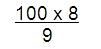
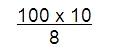
Which of the following calculations gives the best estimate of new company equity value in $ million following such a change?
A)

B)

C)

D)

Question123: A company intends to sell one of its business units. Company W, by a management buyout (MBO). A selling price of S200 million has been agreed.
The managers are discussing with a bank and a venture capital company (VCC) the following financing proposal.

The VCC requires a minimum return on its equity investment In the MBO of 35% a year on a compound basis over 5 years. What is the minimum total equity value of Company W in 5 years time in order to meet the VCC's required return? Give your answer to one decimal place.

Question124: Company AAB is located in country A whose currency is the AS It has a subsidiary, BBA, located m country B that has the BS as its currency AAB has asked BBA to pay BS40 million surplus funds to AAB to assist with a planned new capital investment in country A The exchange rate today is AS1 = BS3
Tax regimes
* Company BBA pays withholding tax of 25% on all cash remitted to the parent company
* Company AAB pays tax of 10% on at cash received from its subsidiary
How much will company AAB have available for investment after receiving the surplus funds from BBA?

Question125: Company A has made an offer to take over all the shares in Company B on the following terms:
* For every 20 shares currently held, Company B's shareholders will receive $100 bond with a coupon rate of 3%
* The bond will be repaid in 10 years' time at its par value of $100.
* The current yield on 10 year bonds of similar risk is 6%.
What is the effective offer price per share being made to Company B's shareholders?

Question126: A company currently has a 6.25% fixed rate loan but it wishes to change the interest style of the loan to variable by using an interest rate swap directly with the bank.
The bank has quoted the following swap rate:
* 5.50% - 5.55% in exchange for LIBOR
LIBOR is currently 5%.
If the company enters into the swap and LIBOR remains at 5%, what will the company's interest cost be?

Question127: An unlisted company.
* Is owned by the original founders and members of their families
* Pays annual dividends each year depending on the cash requirements of the dominant shareholders.
* Has earnings that are highly sensitive to underlying economic conditions.
* Is a small business in a large Industry where there are listed companies with comparable capital structures
Which of the following methods is likely to give the most accurate equity value for this unlisted company?

Question128: The Board of Directors of Company T is considering a rights issue to fund a new investment opportunity which has a zero NPV.
The Board of Directors wishes to explain to shareholders what the theoretical impact on their wealth will be as a result of different possible actions during the rights issue.
Which THREE of the following statements in respect of theoretical shareholder wealth are true?

Question129: An unlisted software development business is to be sold by its founders to a private equity house following the initial development of the software. The business has not yet made a profit but significant profits are expected for the next three years with only negligible profits thereafter. The business owns the freehold of the property from which it operates. However, it is the industry norm to lease property.
Which THREE of the following are limitations to the validity of using the Calculated Intangible Value (CIV) method for this business?

Question130: Company P is a pharmaceutical company listed on an alternative investment market.
The company is developing a new drug which it hopes to market in approximately six years' time.
Company P is owned and managed by a group of doctors who wish to retain control of the company. The company operates from leased laboratories with minimal fixed assets.
Its value comes from the quality of its research staff and their research.
The company currently has one approved drug which generates sufficient cashflow to cover day to day operations but not sufficient for major new research and development.
Company P wish to raise debt finance to develop the new drug.
Recommend which of the following types of debt finance would be most appropriate for Company P to help finance the development of this new drug.

Question131: A listed company plans to raise new capital which will be required for future investment projects. The company has a gearing ratio of 50%, which is just below the company's target ratio.
The directors are comparing the benefits and drawbacks of each of the following two alternative sources of finance;
* Unsecured bank borrowings.
* Convertible bonds.
Which of the following statements is correct?

Question132: Companies A, B, C and D:
* are based in a country that uses the K$ as its currency.
* have an objective to grow operating profit year on year.
* have the same total levels of revenue and cost.
* trade with companies or individuals in the eurozone. All import and export trade with companies or individuals in the eurozone is priced in EUR.
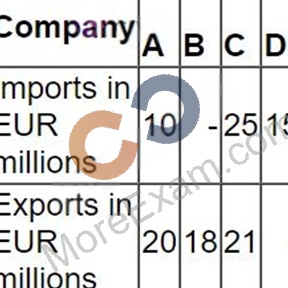
Typical import/export trade for each company in a year are as follows:

Which company's growth objective is most sensitive to a movement in the EUR/K$ exchange rate?

Question133: The Government of Eastland is concerned that competition within its private healthcare industry is being distorted by the dominant position of the market leader, Delta Care. The Government has instructed the industry regulator to investigate whether the industry is operating fairly in the interests of patients.
Which of the following factors might the industry regulator review as part of their investigation?
Select ALL that apply.